ONE BUSINESS IDEA / THREE OPERATING FORMATS

A restaurant.
On your terms.

Start with the way you want to serve. Then inspect the plan, understand the economics and test what would need to be true.

Fictional Austin cases · USD · 2027–2029 forecast

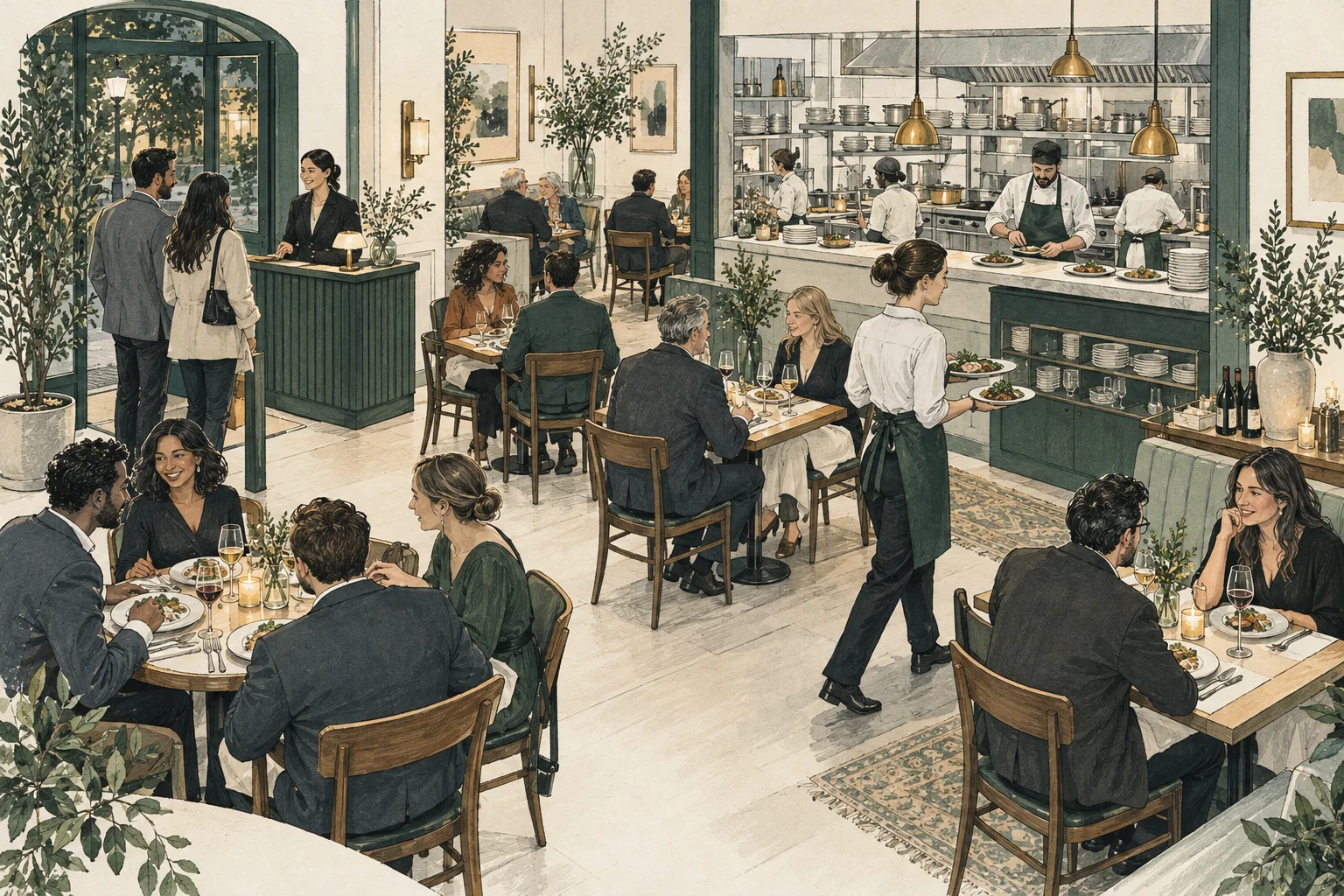
A conceptual neighborhood restaurant with coordinated kitchen and dining-room service
Choose the operation before estimating the return. Concept illustration.

CHOOSE THE OPERATION

Three formats.
Three complete cases.

Every case has its own saved forecast,
full plan and three sample PDFs.

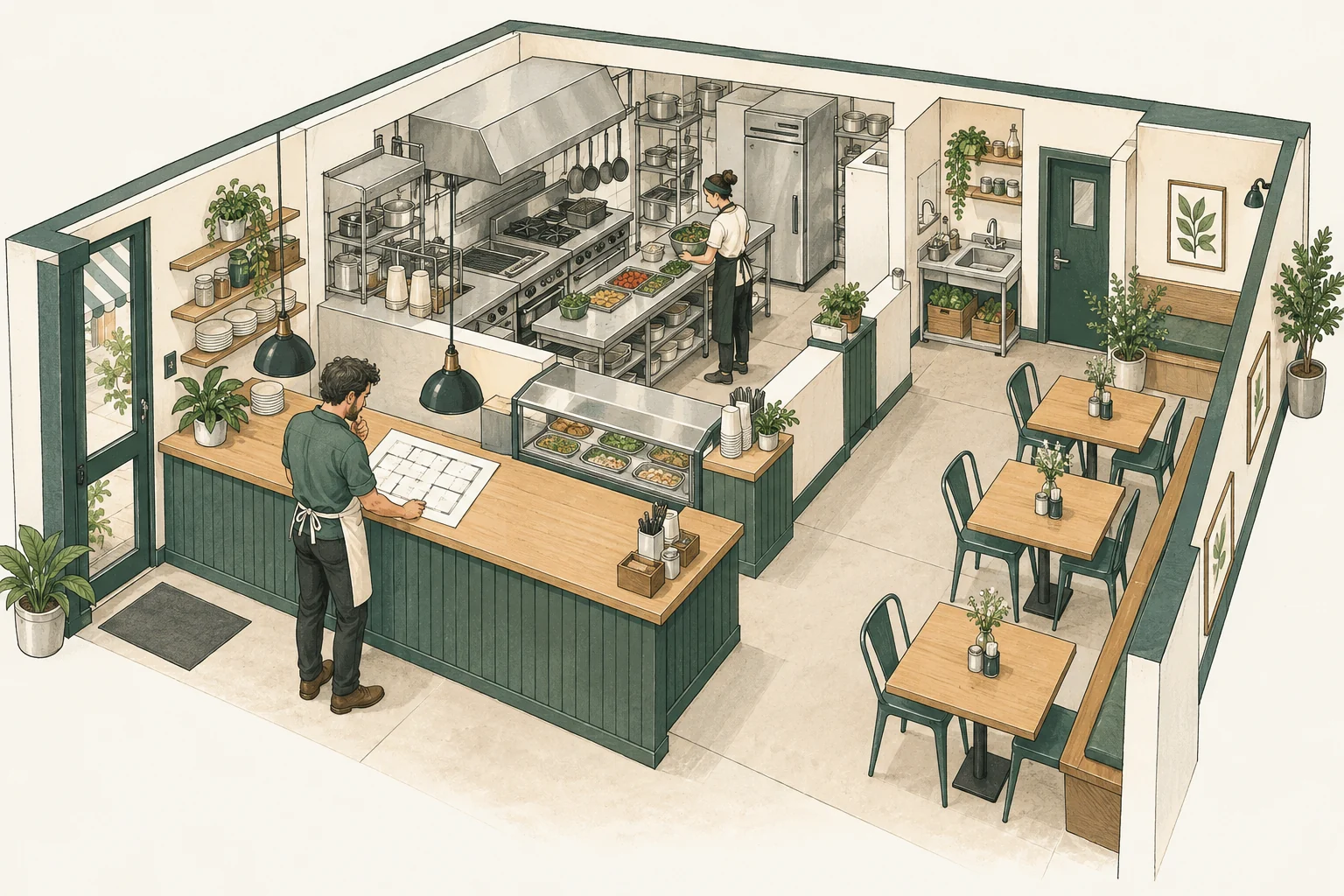
COUNTER SERVICE

Cedar & Saffron

130 counter transactions per day at $17, plus five monthly catering events with 30 meals at $18. Four-month ramp, 26 open days and direct payment.

Startup uses
$183,500
Year 1 net income
−$32,486
Read the complete example ↗
FULL SERVICE

Juniper Table

Guests book or walk in for dinner. A cover is one guest served; an average bill of $42 excludes sales tax and tips. The target of 112 covers per open day represents 80 seats × two planned turns × 70% utilization.

Startup uses
$459,000
Year 1 net income
−$106,225
Read the complete example ↗
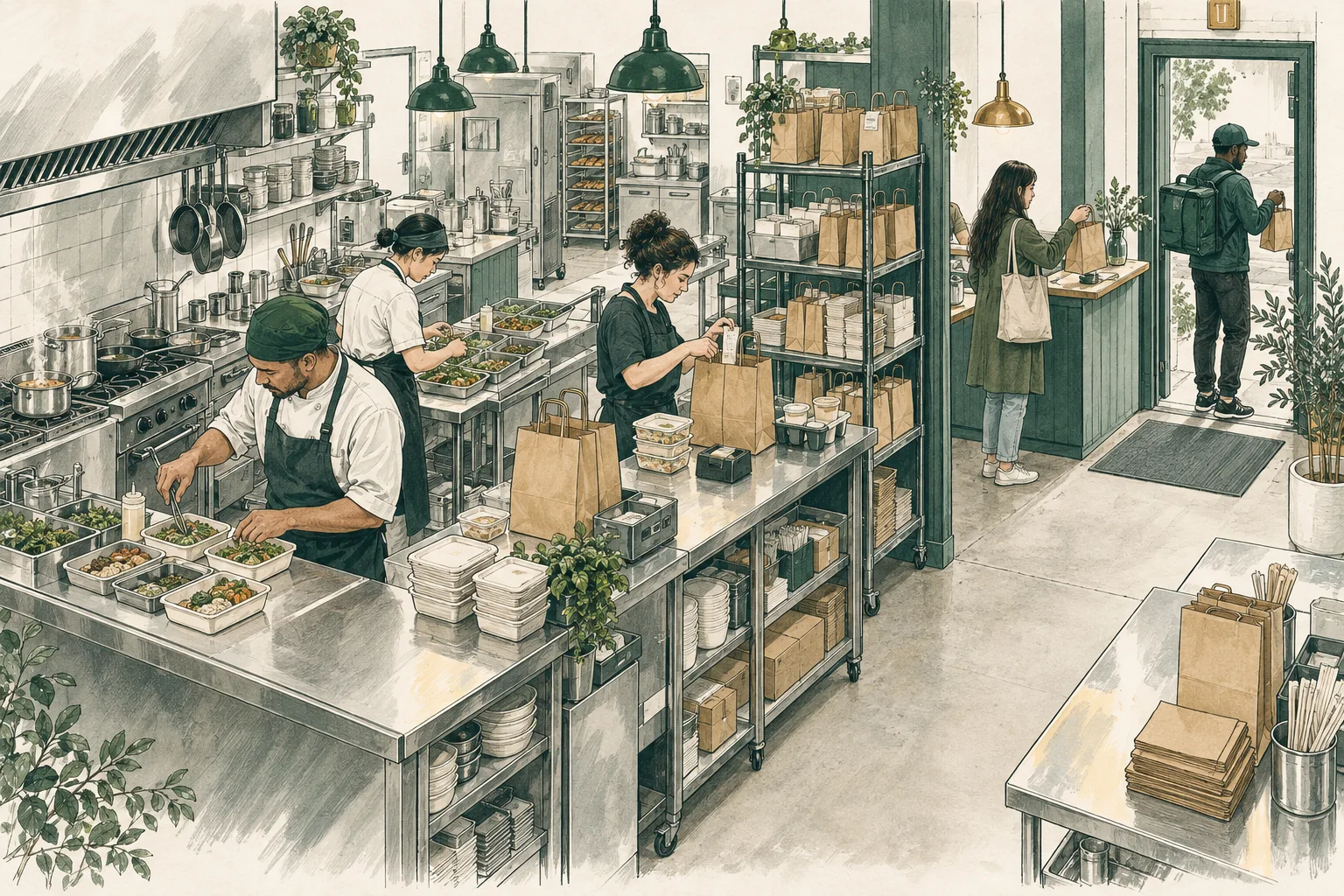
DELIVERY FIRST

Parcel Kitchen

The kitchen sells a complete meal order. Direct pickup targets 45 orders a day at $23; marketplace orders target 75 a day at $25. Both channels use 26 open days and a four-month ramp. The modeled marketplace fee is 25% of that channel’s gross food sales.

Startup uses
$148,000
Year 1 net income
−$8,166
Read the complete example ↗

These cases differ in size, channel and paid resources. Their figures demonstrate a planning method; they are not typical-market budgets or promised results.

WHAT CHANGES WITH THE FORMAT

Follow the sale
through the operation.

One idea. Three different sales mechanisms.Counter serviceTransactions × basket + catering mealsCounter throughput and shared preparationFull serviceSeats × turns × utilization × average billTable availability and kitchen throughputDelivery firstDirect orders × price + marketplace orders × priceShared kitchen, packaging and dispatch
Revenue formulas describe the unit sold. Usable capacity can limit sales even when stated demand is higher. The full-service utilization is a target, not an observed booking rate.

Format decisions that change the financial model
DecisionCounter serviceFull serviceDelivery first
Buying occasionQuick lunch, pickup, office mealsA sit-down evening mealA prepared meal for pickup or delivery
Sales unitTransaction; catering mealCover — one guest servedOrder by sales channel
Paid capacityAssembly line and counter teamTables, cooks, servers and hostCooking, packaging and dispatch
Launch commitmentRestaurant shell, counter and seatingLarger dining room and service coverageDedicated kitchen and channel contracts
Demand testPaid lunches and office trialsPaid dinners and repeat bookingsPaid channel batches and meal travel test

THE ECONOMICS BEHIND THE IDEA

Read the question
you need to answer.

PUT YOUR ASSUMPTIONS TO WORK

Restaurant calculators.
Test your assumptions.

THE NEXT CHAPTER IS YOURS

Start with an example.
Make the plan your own.

Bring your idea and assumptions.
Build a connected planning package.

Create my business plan
ACTUAL PDF PREVIEW

Document preview

View this PDF page
Fit

Use + to inspect details. Scroll the image when enlarged. Escape to close.